

Bitcoin Investment in 2026: A Complete Guide to Digital Assets, Market Risks and Investor Opportunities
Bitcoin continues to occupy a distinctive position in the global investment landscape.
Originally introduced as a decentralised digital payment system, it has developed into a widely discussed financial asset that attracts individual investors, technology enthusiasts, trading firms and institutional market participants.
Its significance extends beyond price movements.
Bitcoin has helped establish an entirely new category of digital assets and stimulated debate about monetary systems, financial sovereignty, technological innovation and investment diversification.
For investors in India and the United States, understanding Bitcoin requires more than monitoring daily cryptocurrency prices.
It requires an assessment of how the network functions, what determines market demand, how investments are held and what risks accompany participation.
What is Bitcoin?
Bitcoin is a digital asset operating on a decentralised network.
Unlike money issued by a central bank, Bitcoin is not created or administered by a single government institution.
Transactions are recorded on a public blockchain, which is maintained through a distributed network of participants.
The system uses cryptographic methods and a proof-of-work consensus mechanism to help validate transactions and protect the integrity of the ledger.
Bitcoin’s protocol specifies a maximum supply of approximately 21 million coins.
This supply characteristic is one reason some investors compare Bitcoin with scarce commodities such as gold.
However, limited supply does not guarantee a stable price or increasing investment value.
Why investors are interested in Bitcoin
Bitcoin attracts attention for several reasons.
The first is its scarcity-based design.
The second is its global transferability. Bitcoin can be transferred across the network without requiring the same intermediary structure used in conventional bank payments.
The third is its role as an alternative financial asset.
Some investors consider Bitcoin as part of a diversified portfolio, while others trade it primarily because of its price volatility.
Institutional access through regulated investment products has also expanded the ways certain investors can obtain exposure.
These factors do not eliminate Bitcoin’s speculative characteristics.
How Bitcoin prices are determined
Bitcoin’s market price is primarily influenced by supply and demand across cryptocurrency exchanges and other trading venues.
Demand may respond to macroeconomic conditions, investor risk appetite, regulatory developments, exchange-traded investment products and expectations surrounding adoption.
Liquidity also matters.
During periods of market stress, a rapid increase in selling pressure can produce substantial price movements.
Bitcoin trades around the clock, unlike many traditional securities markets.
This creates opportunities for continuous trading but can also expose investors to sudden changes outside conventional market hours.
A sharp price increase should not be interpreted as evidence that a similar increase will continue.
Bitcoin investment guide for 2026 covering how Bitcoin works, crypto wallets, volatility, taxation, ETFs and important considerations for USA and India investors.
What is Bitcoin halving?
Bitcoin halving is a protocol-defined event that reduces the block subsidy received by miners.
The mechanism helps control the rate at which new Bitcoin enters circulation.
Halving events occur approximately every four years, although the exact timing depends on block production.
The April 2024 halving reduced the block subsidy from 6.25 BTC to 3.125 BTC.
Investors frequently study halving cycles when analysing Bitcoin’s historical market behaviour.
However, previous price patterns cannot reliably predict future performance.
How to invest in Bitcoin
There are several ways to obtain Bitcoin exposure, depending on jurisdiction and product availability.
Direct cryptocurrency ownership: An investor purchases Bitcoin through a trading platform and may hold it in a custodial account or transfer it to a personal wallet.
Exchange-traded investment products: Certain regulated market products provide exposure to Bitcoin without requiring investors to manage private keys directly.
Cryptocurrency-related equities: Some listed businesses have exposure to Bitcoin through mining, trading infrastructure or corporate treasury holdings.
These approaches carry different risks.
Owning shares of a cryptocurrency-related company is not equivalent to directly owning Bitcoin.
Similarly, an exchange-traded product may involve fees, market structure considerations and custodial arrangements that differ from direct ownership.
Understanding Bitcoin wallets
A cryptocurrency wallet is a tool for managing the credentials needed to access and transfer digital assets.
Wallets may be broadly classified as custodial or self-custodial.
With a custodial service, a third party generally manages the relevant private keys.
With self-custody, the user assumes direct responsibility for protecting access credentials.
Self-custody can provide greater control but also creates serious operational risks.
If recovery information is permanently lost, the associated assets may become inaccessible.
Investors should never share private keys or recovery phrases with anyone claiming to provide customer support.
Bitcoin investment in the United States
The United States has an evolving regulatory framework for digital assets.
Investors need to distinguish between direct cryptocurrency trading, securities-based investment products and activities involving financial intermediaries.
Tax treatment can vary according to the nature of the transaction.
For example, selling cryptocurrency, exchanging it for another asset or using it in certain transactions may create reportable tax consequences.
Investors should maintain detailed transaction records and consult current Internal Revenue Service guidance.
The regulatory status of a platform or product should be verified before transferring funds.
Bitcoin investment in India
Indian investors must consider the country’s virtual digital asset taxation framework and applicable compliance obligations.
India introduced specific tax provisions for certain virtual digital asset transfers, including Section 115BBH of the Income-tax Act and a tax-deduction mechanism under Section 194S.
The treatment of gains, losses, deductions and reporting obligations requires careful attention.
A cryptocurrency platform operating internationally may not necessarily offer the same legal protections or compliance arrangements as a regulated domestic securities intermediary.
Investors should verify the current requirements through official Indian tax and regulatory sources.
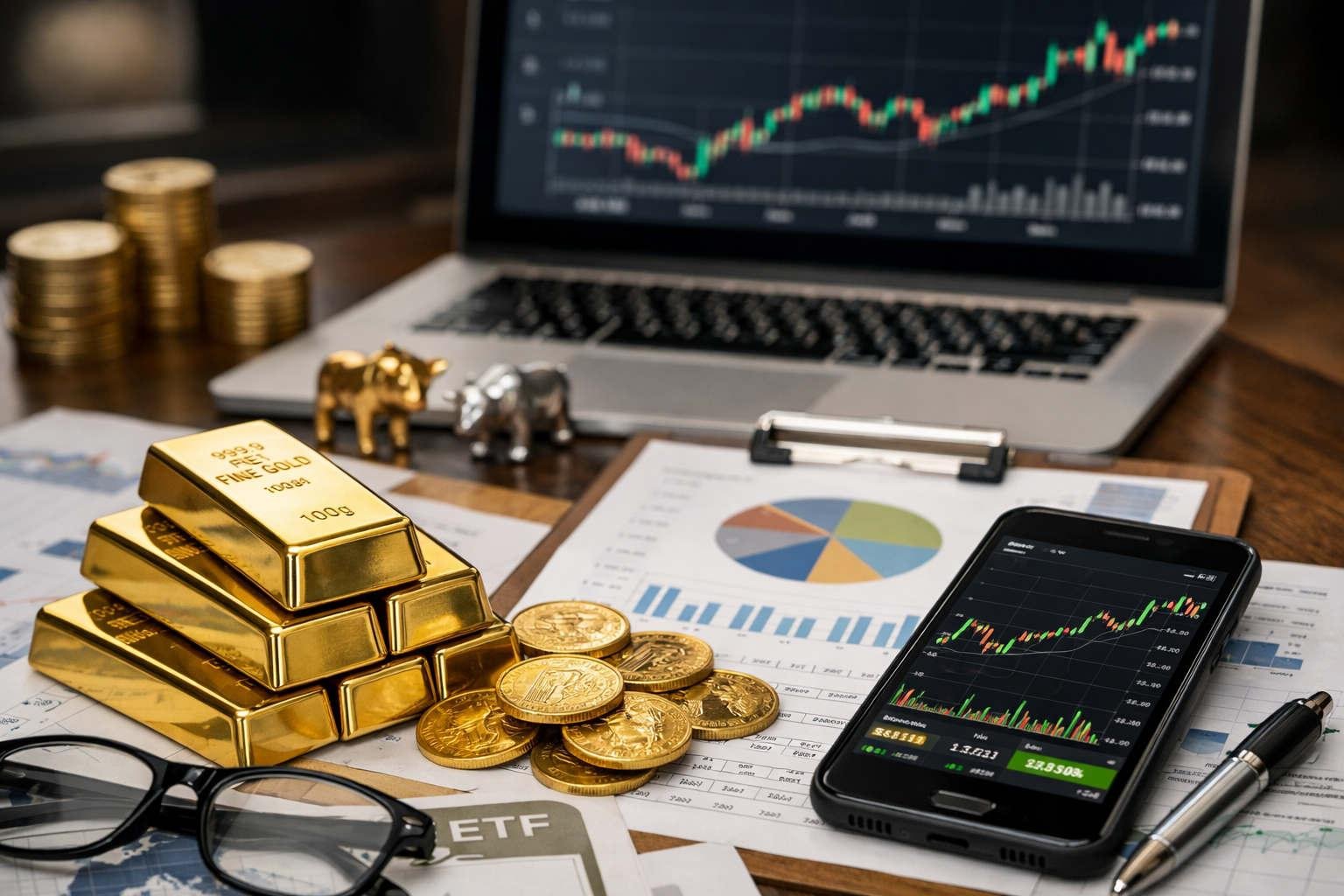
Bitcoin versus gold: Which is the better store of value?
Bitcoin and gold are often compared because both are associated with scarcity.
However, the two assets have fundamentally different histories and market structures.
Gold has served as a store of value and physical commodity across centuries.
Bitcoin is a comparatively recent digital asset whose value depends on market acceptance, network security and investor demand.
Gold has industrial, jewellery and investment applications.
Bitcoin’s utility centres on digital transfer, network participation and its role as a financial asset.
Bitcoin has historically experienced substantially greater price volatility than gold.
Neither asset guarantees capital protection.
Major risks of Bitcoin investment
Volatility is among the most visible risks.
Bitcoin prices can experience substantial declines, even during periods when long-term investor sentiment appears positive.
Cybersecurity presents another challenge.
Phishing, malicious wallet software, fraudulent investment schemes and compromised trading accounts can result in irreversible losses.
There is also regulatory uncertainty.
Changes in legislation, enforcement policy or taxation can affect trading platforms and investor behaviour.
Finally, investors should consider concentration risk.
Allocating an excessive proportion of personal savings to a single speculative asset can undermine broader financial stability.
How beginners should evaluate cryptocurrency investments
A beginner should first understand the asset and the purpose of the investment.
It is important to distinguish long-term ownership from short-term speculation.
Investors should evaluate platform security, custody arrangements, transaction costs and tax obligations.
They should also consider whether they can tolerate a substantial loss without affecting essential financial commitments.
Borrowing money to speculate in a volatile digital asset introduces additional risk.
No investment should be made solely because of social-media enthusiasm or an influencer’s prediction.
The future of Bitcoin and digital assets
The development of institutional investment products, digital custody systems and blockchain infrastructure continues to influence the cryptocurrency market.
At the same time, governments and regulators are evaluating how digital assets fit within existing financial frameworks.
For Bitcoin, long-term relevance will depend on sustained network security, market participation, technological resilience and the evolving relationship between decentralised assets and traditional finance.
Frequently asked questions
Is Bitcoin a safe investment?
Bitcoin carries substantial price, custody, cybersecurity and regulatory risks. It is not a guaranteed or capital-protected investment.
Can investors in India buy Bitcoin?
Indian residents may have access to cryptocurrency platforms, but they must evaluate current legal, tax and compliance requirements.
Is Bitcoin legal in the USA?
Bitcoin ownership and trading are generally permitted in the United States, subject to applicable laws, regulations and tax requirements.
Is Bitcoin better than gold?
The two assets serve different purposes and have different risk characteristics. Neither is universally superior.
Can Bitcoin prices fall to zero?
Bitcoin has no guaranteed minimum market value. Investors should recognise the possibility of severe losses, including the potential loss of their entire investment.
DAO editorial conclusion
Bitcoin represents one of the most influential innovations in the digital asset economy, but technological importance should not be confused with investment certainty.
For investors in the United States and India, informed participation requires understanding blockchain technology, custody, market volatility and applicable regulations.
An investment decision should reflect individual financial circumstances rather than short-term market excitement.
Financial disclaimer: This article is provided exclusively for educational and informational purposes. It does not constitute investment, trading, tax or legal advice, nor a recommendation to buy, sell or hold Bitcoin or any other digital asset. Readers should consult qualified professionals and independently verify current regulations.
Official references: US Internal Revenue Service | Income Tax Department, India | US Investor Education







Leave a Reply