
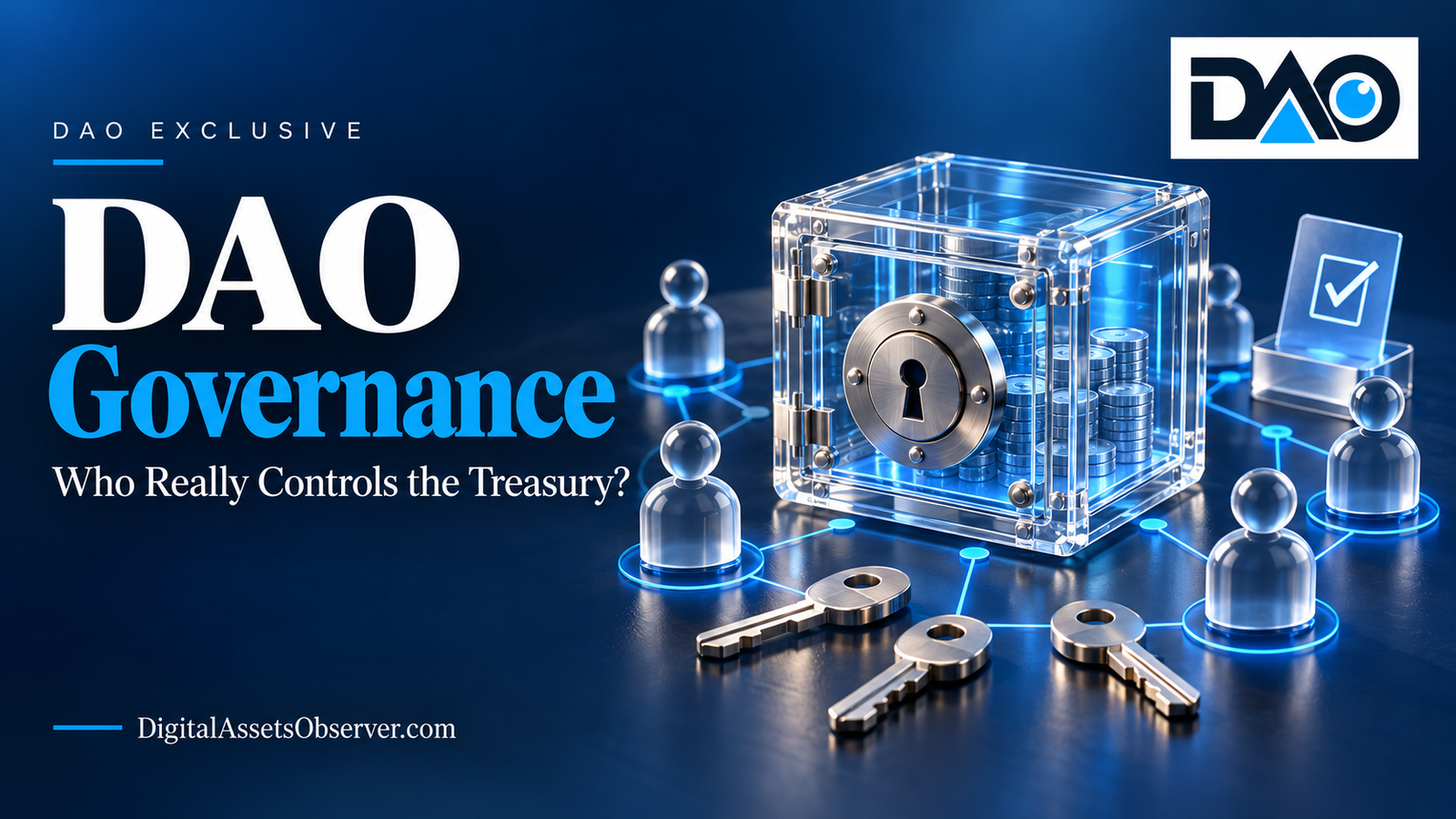
A public vote is only one part of governance. The decisive question is who can turn an approved proposal into a transfer or system change.
A decentralised autonomous organisation can publish every proposal and still leave an ordinary participant uncertain about who exercises control. Votes reveal preferences. Treasury permissions and execution arrangements reveal what the organisation can actually do.
This Digital Assets Observer analysis sets out a practical way to examine DAO governance. It is an explanatory framework, not a field investigation into a named organisation.
Follow a decision from proposal to execution
Start with a concrete action: paying a supplier or changing a protocol setting. Identify who can submit it, what support is required, how voting power is counted and how an approved decision is executed.
Ethereum’s educational material describes DAOs as collectively owned organisations using proposals, voting and blockchain-based rules. Real implementations differ, so examine the particular contracts and operating documents instead of assuming the label establishes a fixed governance model.
Measure influence, not just membership
A large token-holder count does not establish broad participation. Ask how voting power is distributed and how many participants normally exercise it. Delegation can make participation more practical while concentrating influence among a smaller group.
As a hypothetical example, thousands of eligible addresses might exist while a few active delegates determine most decisions. That observation would prompt further questions, not by itself prove misconduct. Examine whether concentration is disclosed and whether members can change their delegation.
Inspect the treasury permissions
Find out whether approved votes directly trigger execution or require separate signatories. If a multisignature arrangement is used, identify the threshold and the responsibilities of the signers. Check whether emergency powers can pause or redirect operations.
Public balances provide visibility into holdings. They do not necessarily show future liabilities, off-chain contracts or the organisation’s ability to meet expenses. Treasury reporting should explain obligations as well as assets.
Ask who can change the rules
Upgrade permissions can matter as much as an ordinary vote. Determine which actors can change contract behaviour, replace administrators or alter the proposal process. A delay before execution may give participants time to inspect a change, but its effectiveness depends on the actual design.
Technical documentation should be read alongside audits and governance records. An audit covering one code version does not establish that later changes carry the same assessment.
Evaluate accountability outside the chain
Projects still need people to maintain software, manage communications and resolve operational problems. Identify who is responsible when an approved payment is disputed or a contributor fails to deliver.
For a reader assessing governance, a useful disclosure explains voting, execution, emergency authority and reporting in one place. More dashboards do not compensate for an unclear chain of responsibility.
Frequently asked questions
Does holding a governance token guarantee equal influence?
No. Influence depends on voting rules, holdings, delegation and participation.
Does transparent governance make a token a safe investment?
No. Governance transparency is one assessment factor; market, operational, security and legal risks remain.
Disclosure: Original editorial analysis based on public educational material; no original interviews or project audits are claimed. This article is not investment advice.








Leave a Reply