

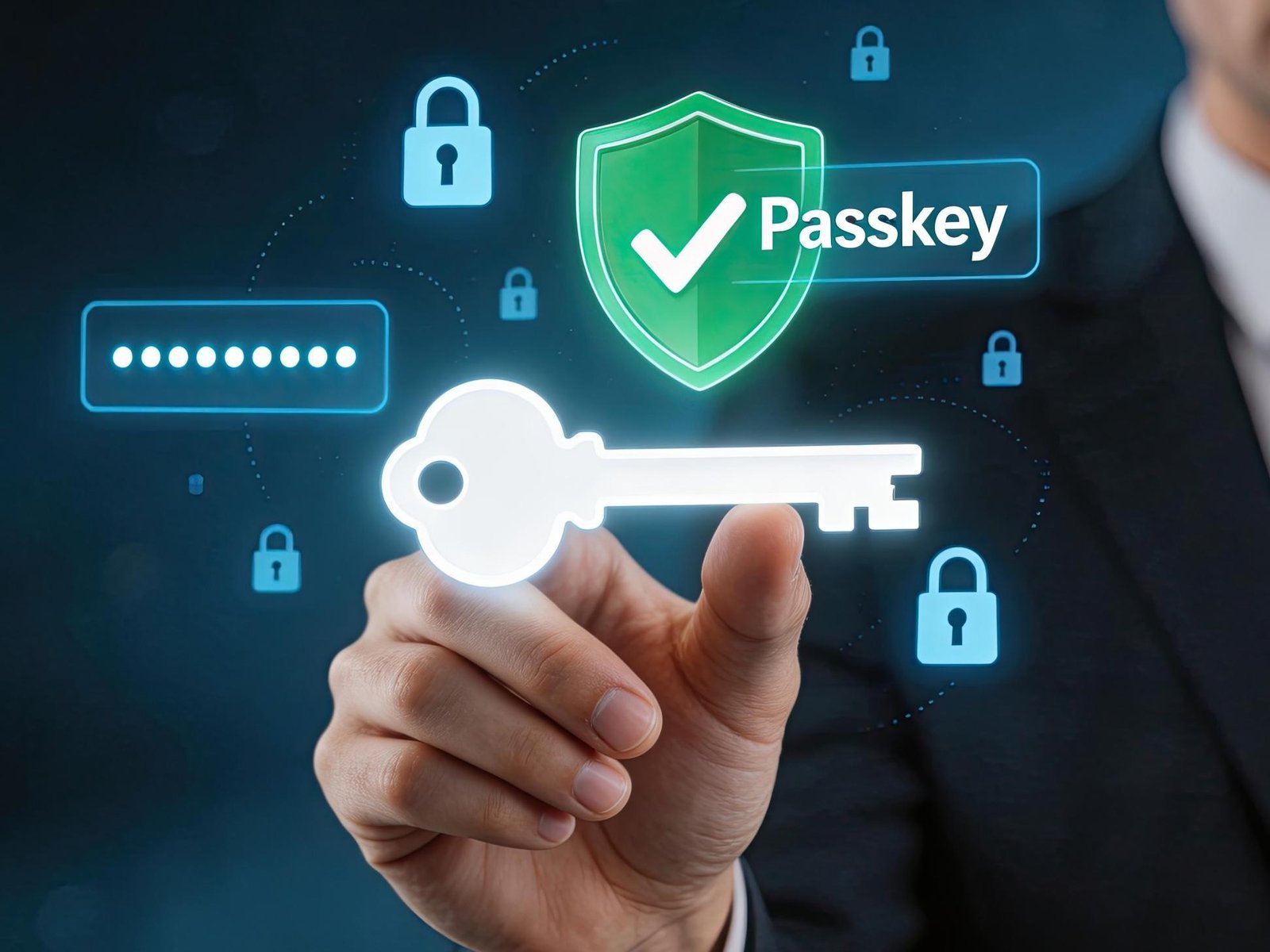
As phishing attacks become increasingly sophisticated, passkeys are emerging as a practical alternative to traditional passwords. But how secure are they, and should individuals and businesses adopt them?
Passwords have protected digital accounts for decades. However, the same authentication method has also created one of the most persistent weaknesses in cybersecurity.
Users frequently reuse passwords, choose predictable combinations or unknowingly enter credentials into fraudulent websites.
Cybercriminals exploit these weaknesses through phishing, credential stuffing, malicious browser extensions and social engineering.
Passkeys aim to address several of these problems by changing how users authenticate themselves.
What Is a Passkey?
A passkey is a digital credential based on public-key cryptography.
Instead of requiring users to remember and enter a password, a passkey allows authentication through a trusted device.
A passkey normally consists of two cryptographic components.
The private key remains under the user’s control, typically protected by the device or credential manager.
The public key is registered with the website or service.
During authentication, the service sends a challenge that the private key signs. The service verifies the signature without needing to receive the private key.
This architecture reduces the risks associated with stolen passwords.
How Passkeys Work
When a user creates a passkey, the device generates a cryptographic key pair.
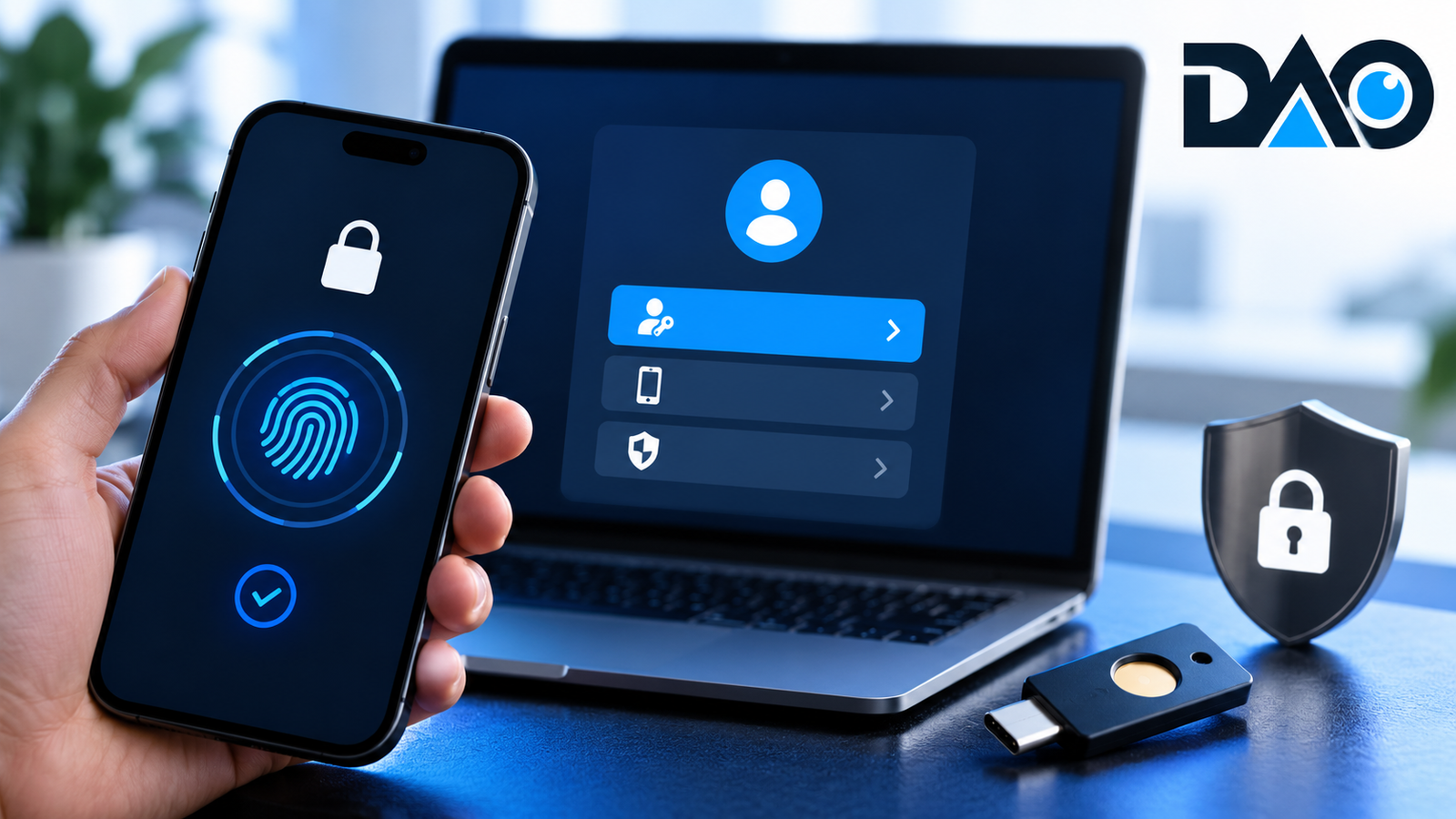
The user may subsequently sign in using a fingerprint, facial recognition, device PIN or another local verification method.
Importantly, biometric information generally remains on the device and is not transmitted to the website as the authentication secret.
Passkeys are associated with the legitimate service’s domain, making them resistant to conventional phishing attempts involving imitation login pages.
Passkeys vs Passwords: Key Differences
| Feature | Traditional password | Passkey |
|---|---|---|
| Authentication | Shared secret | Public-key cryptography |
| User memory | Often required | Usually not required |
| Phishing resistance | Vulnerable | Stronger protection |
| Credential reuse | Common risk | Unique credential per service |
| Device dependency | Usually lower | Device or credential-manager access needed |
| Recovery | Password reset | Depends on provider and recovery configuration |
Why Passkeys Offer Stronger Phishing Protection
Traditional phishing works by persuading users to disclose information that attackers can reuse.
A fake banking website, for example, may collect a username and password.
With a properly implemented passkey, the private credential is not disclosed to the website.
Additionally, passkeys are bound to the relying party’s identity, helping prevent authentication on fraudulent lookalike domains.
This does not make users immune to every attack.
Malware, compromised devices, fraudulent account recovery and social engineering can still create risks.
Are Passkeys Completely Secure?
No authentication method eliminates all cybersecurity threats.
Passkey security depends on device protection, account recovery policies, credential synchronization and the implementation of the service itself.
Users who lose access to every trusted device may encounter account recovery difficulties.
Cloud-synchronized passkeys introduce dependence on the security of the relevant ecosystem.
Businesses should therefore consider recovery procedures, device management and incident response before deploying passkeys at scale.
How to Start Using Passkeys
The general setup process is straightforward.
- Open the security settings of a service that supports passkeys.
- Select the option to create a passkey.
- Authenticate using the device’s supported verification method.
- Save the credential using a trusted device or credential manager.
- Confirm that account recovery options are secure and current.
Users should avoid following unexpected messages that direct them to unfamiliar login pages.
Why Businesses Should Consider Passkeys
Small and medium-sized enterprises increasingly depend on cloud applications, digital payments, customer databases and remote access.
Compromised employee credentials can expose sensitive business information.
Passkeys can reduce reliance on passwords and help protect important accounts.
However, businesses should combine passkeys with employee training, endpoint security, access controls and secure account recovery.
Authentication is only one layer of a comprehensive cybersecurity strategy.
What Happens to Password Managers?
Password managers remain useful.
Many now support passkey storage alongside traditional credentials.
Because not every service offers passwordless authentication, users may need both systems for the foreseeable future.
The objective should be reducing authentication risk rather than abandoning established security practices prematurely.
DAO Perspective: Passwordless Security Is a Practical Evolution
Passkeys represent a meaningful improvement in consumer and enterprise authentication.
Their strongest advantage is not simply convenience but the reduction of reusable credentials that attackers can steal.
However, the effectiveness of passkeys depends on how securely the entire account lifecycle is managed.
Organizations should evaluate authentication, recovery, device protection and employee awareness together.
Frequently Asked Questions
Are passkeys safer than passwords?
Properly implemented passkeys offer stronger resistance to conventional credential phishing and password reuse.
Can passkeys be hacked?
Devices, accounts and recovery systems can still be compromised. Passkeys reduce certain risks but do not eliminate all attacks.
Can I use passkeys on multiple devices?
Many ecosystems support synchronized passkeys, while other implementations use device-bound credentials.
Do passkeys replace two-factor authentication?
Passkeys can provide multi-factor authentication properties, but requirements depend on the service and its implementation.
Conclusion
Passkeys offer a promising route toward safer and more convenient digital authentication.
For individuals and businesses, adopting passkeys alongside sound device security and recovery practices can significantly strengthen protection against common credential attacks.
Further reading: Explore enterprise cybersecurity and digital transformation at SMEStreet.
Editorial reference: FIDO Alliance.




Leave a Reply