
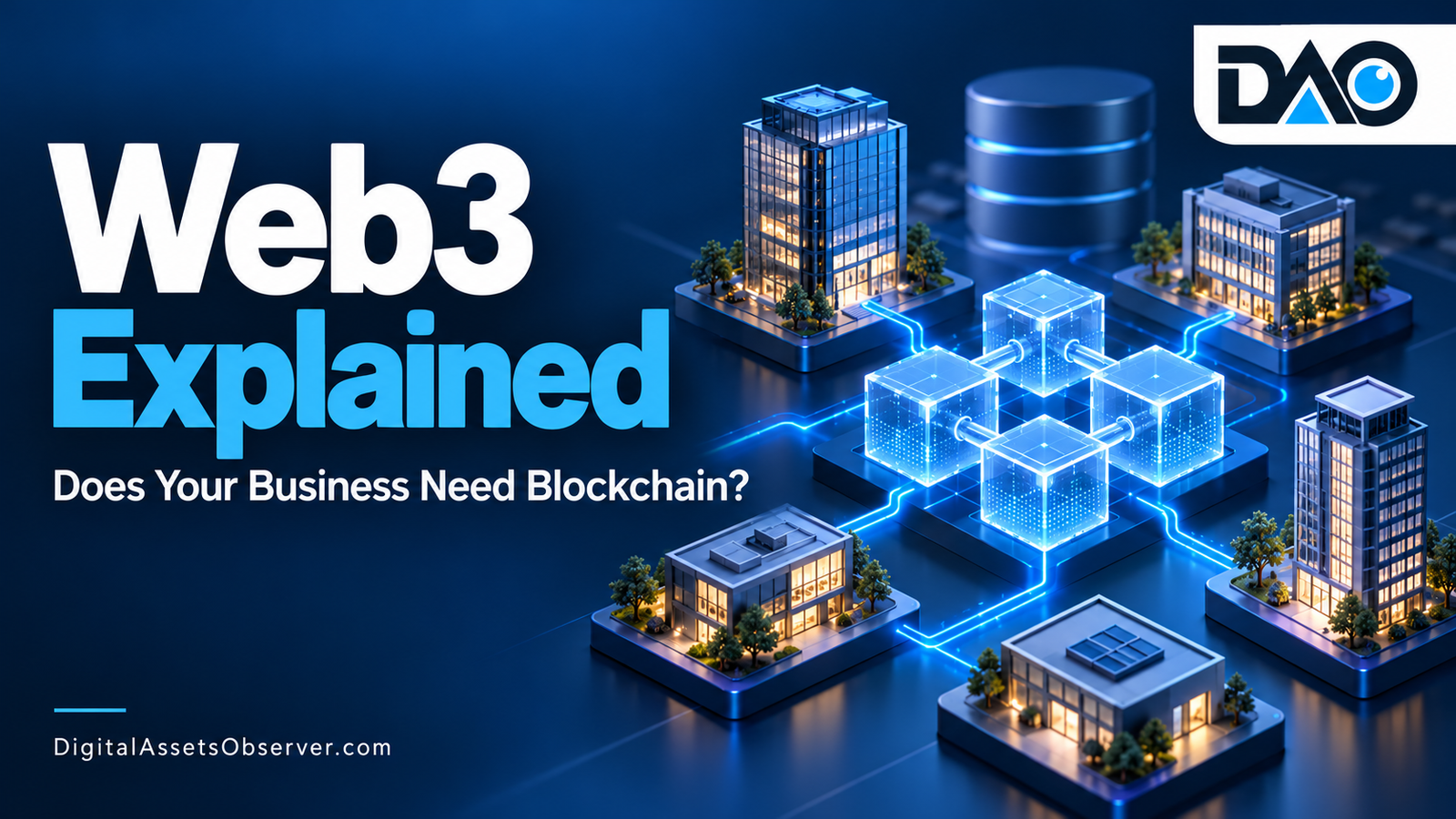
A business can operate online, automate payments and sell digital products without becoming a Web3 business. The more useful question is whether it needs several parties to share records or control without relying entirely on one operator.
Web3 is a broad term for approaches that use blockchain-based systems and related tools to support ownership, coordination and transactions. Ethereum’s educational introduction places decentralisation and user ownership at the centre of that vision. Implementation requires a closer look at how power and responsibility are actually distributed.
Begin with the coordination problem
Consider a hypothetical membership programme involving several independent businesses. If one company runs the database, the others must accept its access rules and reporting. A shared ledger might make some records easier to inspect across the group.
But the group still needs agreement about who can issue memberships, correct mistakes and resolve disputes. A blockchain records authorised actions; it does not automatically establish that every underlying claim is true.
Three questions before building
| Question | Why it matters |
|---|---|
| Do multiple independent parties need shared records? | A single-operator application may work well with a conventional database |
| What rights does a token represent? | A digital record needs explicit commercial and legal meaning |
| Who can change or stop the system? | Administrative control can override assumptions about decentralisation |
Separate a token from the thing it references
A token can represent an entry in a system. It does not automatically transfer copyright, legal title or an enforceable claim on a physical asset. Those rights depend on the surrounding agreements and applicable law.
For a buyer, the practical document may be the terms governing redemption. For a business, the difficult work may be connecting a digital record to inventory, customer support and accounting. A technically transferable token is not necessarily a commercially usable product.
Inspect dependencies behind the interface
Ask which network is used, how fees arise, who maintains the application and what happens if a service provider disappears. Some interfaces depend on conventional hosting, data services or administrator accounts even when transactions are recorded on a blockchain.
Smart contracts introduce their own failure possibilities. A published audit can inform assessment, but it does not guarantee safe operation. The scope, date and version reviewed matter.
Plan for privacy and customer mistakes
Public records can create difficulties when information needs to remain confidential. Do not place personal customer details on a public ledger simply because the application permits it. Establish a data design before building the transaction flow.
Also plan for lost access, mistaken transfers and support requests. If the service relies on customers managing complex credentials, include that burden in the adoption assessment.
Frequently asked questions
Does every Web3 project need a tradable token?
No. Decide which function is required before considering a token or a secondary market.
When is a conventional database preferable?
It is worth considering when one accountable operator can manage the records, privacy requirements are substantial and shared public verification adds little value.
This is a technology explainer, not an endorsement of any token or investment.






Leave a Reply