

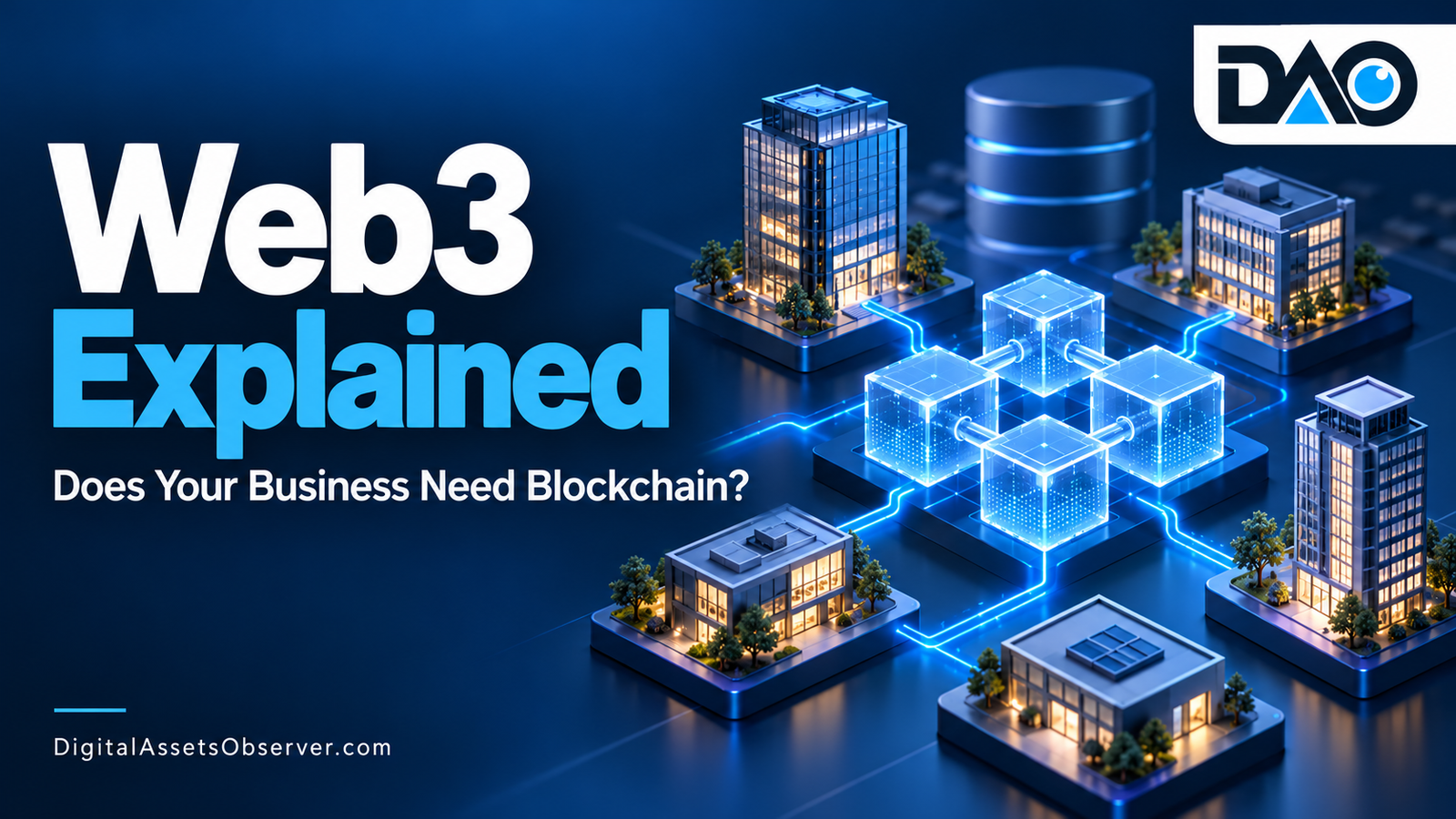
The phrase ‘own a fraction of a building through blockchain’ is remarkably effective marketing. It suggests that a costly, complicated investment can become as simple as purchasing a digital token. Yet a digital record and a legally enforceable property right are not the same thing. Real-world asset tokenisation can represent interests in securities, debt, funds, property arrangements or other claims using a digital ledger. In suitable settings it may improve record keeping or settlement. But investors who focus only on tokens risk missing the entities, legal agreements and operational systems that make an asset valuable. The decisive question is not whether a token exists. It is what rights the token holder can enforce against whom, under which law.
What tokenisation actually changes
Tokenisation is the creation of a digital representation of an interest or claim, often on a distributed ledger. The underlying asset might be a financial instrument, a commodity arrangement, a receivable or a property-related investment. Depending on the design, the token may record ownership of a security, participation in a fund, a contractual right to proceeds or something less substantial. Technology can automate record updates and transfer instructions, but it cannot by itself change local property law. If the original claim is uncertain or unenforceable, putting it on-chain does not make it secure. Investors need to read the legal documentation that gives meaning to the token, not assume the code is a substitute for that documentation.
A token is not automatically a property deed
A land registry generally operates under national or subnational law, with rules about transfer, liens, taxes and disputes. A smart contract may transfer a token in seconds while the corresponding legal interest remains subject to registration or contractual conditions. Many real-estate tokenisation structures therefore place the asset inside a company, trust, fund or other vehicle, and issue interests related to that vehicle. An investor may own securities in a company that owns a property rather than the property itself. This distinction affects voting rights, management decisions, creditor claims and remedies if something goes wrong. Marketing that describes every investor as a ‘direct property owner’ should be challenged until the governing documents justify that description.
Understand the special-purpose vehicle
A special-purpose vehicle, or SPV, is frequently used to hold an asset or contractual interest separately from other activities. It can create a clearer investment structure, but its governance matters as much as the technology. Who appoints the directors? Who can borrow against the property? How are rents collected, expenses approved and cash distributions made? What happens if the manager resigns? Token ownership may not confer meaningful control over those decisions. Read the corporate documents alongside any token terms. A well-designed structure can protect investor interests through defined obligations, reporting and independent oversight. A poorly designed one can concentrate power in the hands of a promoter while offering investors an attractive trading interface and little practical recourse.
Blockchain settlement and legal settlement are different
A transfer may be final according to a blockchain protocol but still be contested under applicable law. Securities laws may restrict who can hold or trade the interest. A court may order a freeze, an administrator may need to correct an error, or an intermediary may be legally required to reverse an unlawful transaction. It matters whether the ledger is the definitive legal register or merely a technical mirror of records kept elsewhere. If two systems disagree, which one governs? A project should explain that hierarchy before investors transfer funds. Investors should also know whether an administrator can pause, reissue or invalidate tokens under defined circumstances. Those powers may be necessary for compliance, but they should be transparent rather than discovered only during a dispute.
Fractional access does not ensure genuine liquidity
Breaking an asset into thousands of units lowers the nominal size of a purchase. It does not automatically create buyers when owners want to sell. Real estate and private-credit interests may remain fundamentally illiquid, and secondary-market access can be restricted by regulation or platform rules. A quoted token price is only useful if the investor can execute a meaningful transaction near that price. Review trading volume, market-maker arrangements, lockups, transfer restrictions and withdrawal processes. Ask whether investors can exit to conventional bank money and how long that may take. Fractionalisation creates smaller units; liquidity requires a functioning market and a claim whose value other buyers can assess with confidence.
Custody and cybersecurity introduce new dependencies
A tokenised interest may be held through a regulated custodian, a platform-controlled wallet or an investor’s own wallet. Each structure has different failure modes. Custodial accounts depend on intermediary controls and solvency; self-custody depends on secure key management and the ability to recover from errors. A smart-contract vulnerability can compromise transfers or administrative permissions even if the real-world asset remains intact. A project needs independent security review, emergency procedures, documented key holders and a mechanism for handling lost access consistent with legal ownership rules. Beware of assurances that blockchain records make fraud impossible. Distributed ledgers can make particular transactions transparent while leaving dishonest valuations, misleading documents and social-engineering attacks entirely possible.
Valuation remains an old-fashioned discipline
A property’s value still depends on location, tenancy, maintenance, financing costs and market conditions. A receivable depends on whether the debtor pays. A tokenised fund still needs reliable pricing of its investments. Faster record keeping does not remove appraisal risk or eliminate conflicts of interest. Ask who values the asset, how often the valuation is updated and whether the valuer is independent of the promoter. Understand how fees are charged and whether realised proceeds may diverge from the app’s displayed estimate. Consider stress scenarios such as a vacant building, a borrower default or a sudden rate increase. If the investment presentation contains detailed blockchain diagrams but little discussion of the underlying economics, the analysis is incomplete.
Investor protections depend on the actual instrument
Whether a token is a security, a fund interest, a commodity claim or another legal arrangement depends on the facts and jurisdiction. Investor eligibility, disclosure, marketing and secondary trading can be subject to existing financial regulations. The presence of a token does not create an exemption from those rules. The International Organization of Securities Commissions has examined tokenisation as a developing area with potential benefits and risks to market integrity and investor protection. Readers should verify the status of the actual issuer and distribution channel, not rely on statements that ‘decentralisation means no regulator applies’. Independent professional advice may be especially important for cross-border offerings involving unfamiliar holding companies and governing law.
Cash flows matter more than token price graphics
For income-producing assets, build a plain-language cash-flow bridge: revenue comes in, operating expenses and taxes go out, financing costs are paid, managers receive fees and the remainder may be distributed according to investor rights. Ask whether distributions are discretionary, whether investors have preferred claims and whether the platform can change its fees. Understand how capital expenditure and unexpected losses are funded. If the project promises a fixed yield, examine the legal and economic source of that promise rather than assuming it is generated by blockchain technology. A fluctuating market price may reflect speculation about future earnings rather than the current value of the underlying property or receivable.
A due-diligence example using a commercial property
Suppose a promoter offers 10,000 digital units linked to a small office building. Ask first who holds legal title and whether lenders already have priority claims. Obtain the latest valuation, tenancy information and maintenance obligations. Check the rights associated with one unit: dividend participation, voting, redemption, transfer, information access and liquidation ranking. Examine the platform’s custody arrangement and whether there is a credible secondary market. Then model weak occupancy and an expensive repair. Would distributions stop? Could the manager raise fresh capital or dilute existing holders? The value of this exercise is that it forces every attractive technical claim to connect with a conventional investment obligation that can be understood and verified.
Where tokenisation may genuinely help
Financial institutions are exploring potential improvements in administrative efficiency, transfer processing, reconciliation and programmable settlement. For products whose underlying rights are already clearly defined, tokenisation might reduce manual handoffs and enable more precise record keeping. Smaller investment units may also broaden access when investor-protection requirements are met. However, interoperability, credible settlement assets, market structure and clear legal treatment remain practical constraints. A project should identify the precise problem that tokenisation solves and the evidence supporting the claimed improvement. If the same outcome can be achieved more cheaply and safely with a conventional database, blockchain may be an optional design choice rather than a business necessity.
Red flags for retail investors
Be cautious of guaranteed appreciation, pressure to buy before a ‘minting deadline’, vague claims of institutional backing and token prices disconnected from a documented valuation. Check for anonymous managers, missing audited information and promises of instant liquidity for assets that rarely trade. Confirm that the property’s address and ownership can be verified independently. Review who controls administrative keys and whether a promoter can issue more tokens or change terms unilaterally. Do not send money or digital assets to a wallet obtained from unsolicited messages. Demand the investment documents before committing funds and read the exit provisions with the same care as the advertised upside. A sophisticated interface is not evidence of an investment’s legitimacy.
Frequently asked questions
Does buying a real-estate token make me a legal owner of the building?
Not necessarily. The token may represent an interest in an entity, a debt instrument or a contractual arrangement. Legal rights depend on the applicable documents and jurisdiction, not on the token’s name.
Can tokenised assets always be traded at any time?
No. Trading depends on transfer restrictions, market demand, suitable venues and liquidity. The existence of a digital token does not guarantee a buyer, a fair price or immediate conversion to bank money.
Are smart contracts enough to protect investors?
No. Smart contracts can enforce particular technical rules, but cannot independently verify every asset valuation, title record, management decision or off-chain cash flow. Legal and operational protections remain necessary.
Why are regulators interested in tokenisation?
Tokenisation could alter how financial assets are issued, recorded, transferred and settled. Regulators evaluate both potential efficiency gains and risks involving disclosure, custody, market integrity and investor protection.
The bottom line
Real-world asset tokenisation deserves serious examination precisely because it connects emerging technology to old financial obligations. The best structures make ownership rights, cash flows and governance easier to verify. The weakest use a blockchain label to obscure those details. Before buying any token linked to a property, bond or other asset, identify the real issuer, underlying claim, legal protections, valuation method, custody model and exit route. If those answers cannot be explained without technical theatre, the investment case has not been established.
Related reading on Digital Assets Observer
- Passkeys, MFA and Recovery: Build a Safer Digital Identity in 2026
- Buying a Refurbished Smartphone: The Checks That Protect Your Money
Editorial references
Editorial note: This guide is educational information, not personalised legal, tax or investment advice. Verify current rules and product terms before acting.




Leave a Reply