
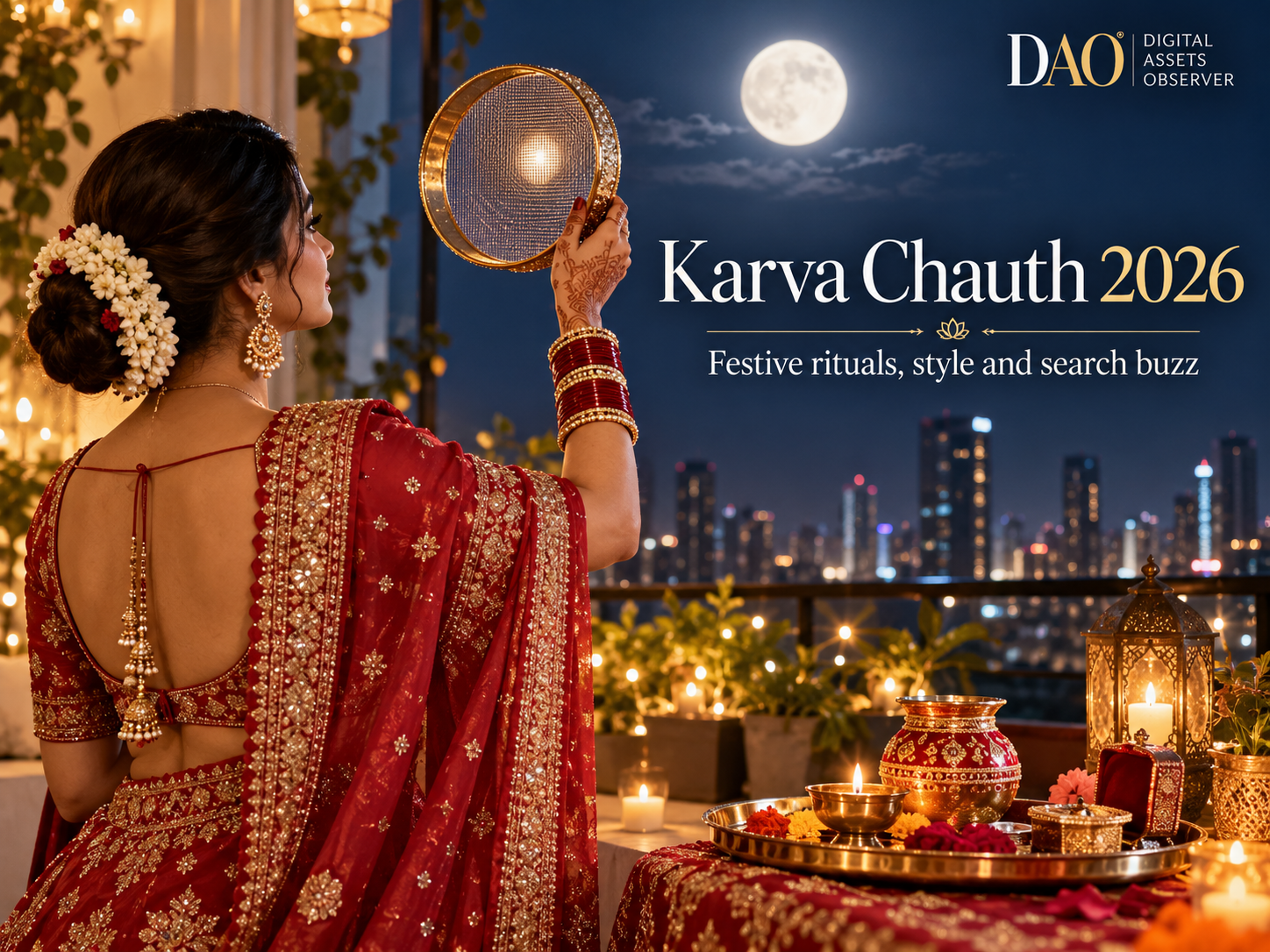
Search interest in Karva Chauth rituals, moonrise information and festive greetings highlights how traditional celebrations continue to evolve alongside contemporary fashion and digital lifestyles.
New Delhi, October 29, 2026: Karva Chauth remains a significant occasion in the festive calendar for many Indian families, combining long-established traditions with evolving preferences in fashion, jewellery, gifting and celebrations.
The 2026 observance has generated notable online interest in moonrise timings, puja rituals, traditional stories and festive greetings.
Google Trends data for India shows increased searches related to Karva Chauth, including questions about the traditional katha, moonrise information and celebration wishes.
The occasion also reflects a wider lifestyle trend in which consumers combine cultural customs with contemporary clothing, accessories and digitally enabled festive shopping.
Understanding the Significance of Karva Chauth
Karva Chauth is traditionally observed by many married Hindu women, particularly in northern and parts of western India.
Customs vary between families and communities, but the festival is commonly associated with fasting, prayer and expressions of marital commitment.
Traditional observances often include early-morning preparations, family gatherings, evening puja and rituals associated with the appearance of the Moon.
The festival also carries strong social and cultural significance.
For many families, the occasion provides an opportunity to maintain inherited traditions while bringing relatives and friends together.
At the same time, contemporary celebrations increasingly reflect individual preferences and changing family practices.
Karva Chauth 2026: Why Moonrise Information Is Important
Moonrise timing is an important part of the traditional observance because many participants conclude their fast after the relevant evening rituals.
However, moonrise times are not identical across India.
They vary according to geographic location, local weather conditions and the precise time and manner of observation.
Published festival guidance for 2026 places the observance on October 29, although readers should consult a reliable local Panchang for location-specific ritual information.
Some published guidance indicates an approximate moonrise time of 8:17 PM for Delhi and neighbouring NCR cities.
This should be treated as a local estimate rather than a nationwide timing.
Weather conditions may also affect the visibility of the Moon, making local information particularly relevant.
Traditional Rituals and Their Cultural Meaning
The observance often begins before sunrise with customary preparations.
In many families, the early-morning meal known as sargi forms part of the tradition.
During the day, participants may engage in prayer, family activities and preparations for the evening puja.
The Karva Chauth katha is also an important part of the observance in many households.
Evening rituals may involve a decorated puja thali, a karwa or ceremonial vessel, lamps and traditional offerings.
Families follow different practices depending on regional customs and individual traditions.
These differences reflect the diversity of how the festival is celebrated across India.
Festive Fashion: Traditional Clothing Meets Contemporary Styling
Karva Chauth is also associated with festive dressing.
Traditional sarees, lehengas and embellished ethnic outfits remain popular choices.
However, contemporary consumers increasingly seek clothing that combines traditional aesthetics with comfort and versatility.
This has encouraged interest in lightweight fabrics, coordinated sets, understated embroidery and accessories that can be worn beyond a single occasion.
Modern festive fashion does not necessarily mean abandoning traditional designs.
Instead, it often involves adapting familiar colours, silhouettes and decorative styles to contemporary preferences.
Jewellery Becomes an Important Festive Expression
Jewellery plays a visible role in many Karva Chauth celebrations.
Gold necklaces, earrings, bangles, rings and mangalsutras are commonly associated with festive dressing.
Contemporary jewellery collections increasingly include minimalist designs and lightweight pieces suitable for repeated use.
For consumers, this creates opportunities to select jewellery that can be incorporated into everyday wardrobes rather than reserved exclusively for special occasions.
However, buyers should prioritise product quality and transparent specifications.
Gold purity, appropriate hallmarking, diamond certification and return policies deserve careful attention when making jewellery purchases.
Digital Shopping and Festive Consumer Behaviour
Online shopping has changed how consumers prepare for festivals.
Customers can now compare clothing, accessories, home decorations and gifting options through digital marketplaces.
Quick-commerce services may also play a role in last-minute purchases of selected festive essentials.
However, convenience should be balanced with sensible purchasing decisions.
Consumers should check delivery availability, product authenticity and refund terms before placing time-sensitive orders.
Seasonal shopping trends can create opportunities for retailers, but the popularity of a particular search term does not establish actual sales volumes without transaction data.
Social Media Shapes Modern Celebrations
Digital platforms increasingly influence how festive moments are shared and remembered.
Short videos, photographs, festive greetings and styling ideas can help families stay connected even when members live in different locations.
Social media also provides opportunities for people to discover regional traditions and creative ideas.
However, the online presentation of festivals does not necessarily represent the full diversity of personal or family practices.
Celebrations remain deeply individual, with different households placing emphasis on different traditions.
Celebrating with Health and Personal Choice in Mind
Fasting traditions involve personal decisions, and participation may vary according to health, age and individual circumstances.
Prolonged fasting or restrictions on fluids may not be appropriate for everyone.
People who are pregnant, have medical conditions or take medication should seek appropriate professional advice rather than assuming traditional fasting practices are medically safe.
Families can respect cultural traditions while recognising individual health requirements and personal choices.
Frequently Asked Questions
When is Karva Chauth 2026?
Published festival calendars place the observance on October 29, 2026. Local Panchang guidance should be consulted for specific rituals.
What time is moonrise for Karva Chauth 2026?
Moonrise varies by location. One published estimate for Delhi NCR is approximately 8:17 PM.
Why is the Karva Chauth katha important?
The katha is a traditional part of the festival’s religious observance in many households, with practices varying by community.
What jewellery styles are popular for Karva Chauth?
Traditional gold jewellery remains relevant, alongside contemporary lightweight necklaces, mangalsutras, rings and bracelets.
Conclusion
Karva Chauth 2026 demonstrates the continued relevance of traditional celebrations in contemporary Indian society.
The occasion brings together cultural practices, family relationships, festive fashion and digital engagement.
While online search interest reflects questions about rituals and moonrise timings, the celebration’s wider significance lies in the personal and family traditions associated with it.
For lifestyle businesses, the occasion also illustrates how cultural festivals continue to influence fashion, jewellery and consumer preferences.











Leave a Reply