
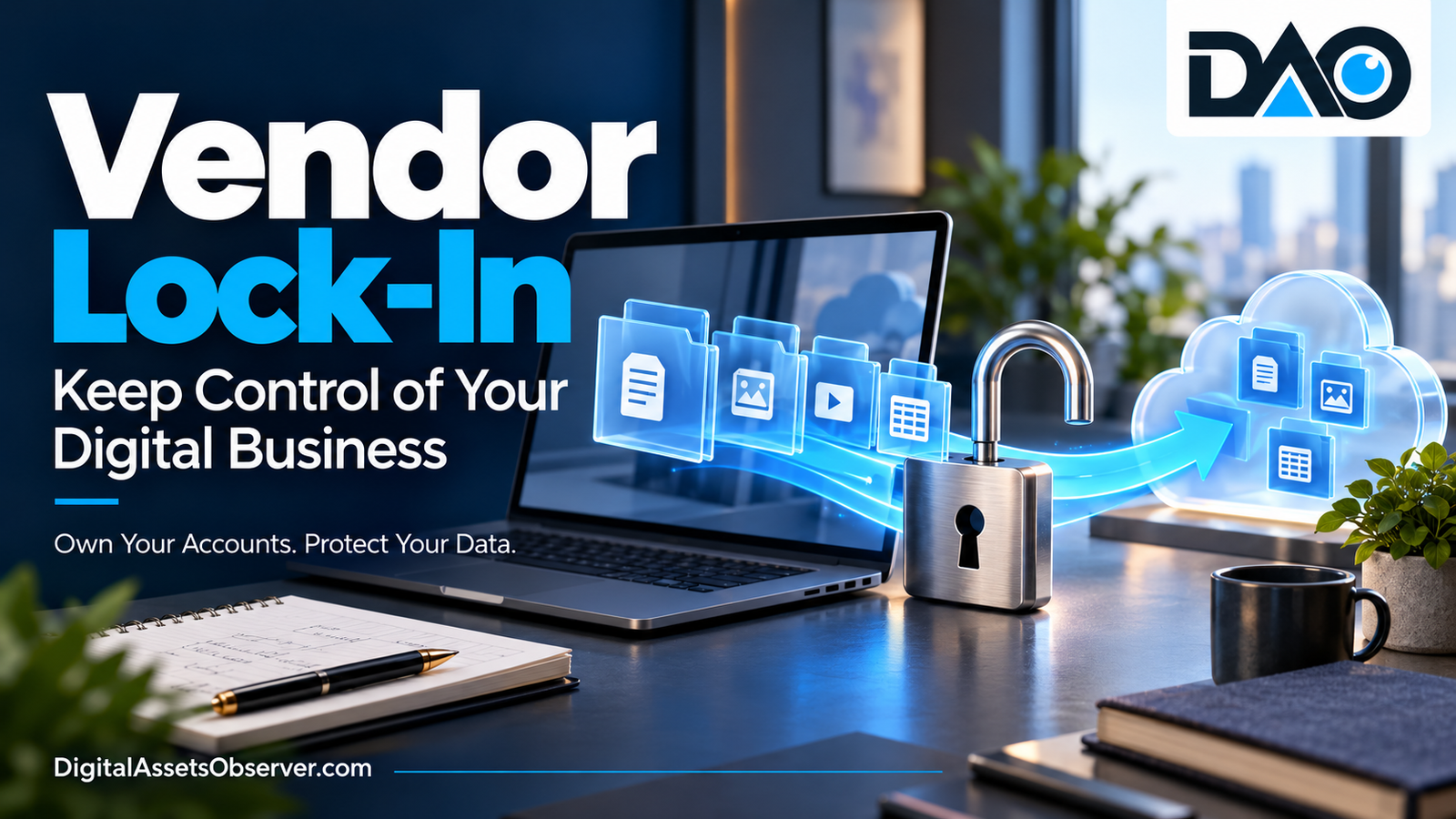
A platform becomes expensive to leave when the company has never checked what it can take with it.
A company may own its brand while depending on someone else’s account to operate its website. It may pay for a customer database yet discover that its export omits the notes and relationships that make the records useful.
Vendor lock-in is the practical cost of changing systems. Some dependence is unavoidable and commercially reasonable. The problem arises when a business discovers the consequences only after a price increase, service failure or disagreement.
Establish who owns the accounts
List the domain registrar, hosting, email, CRM, ecommerce platform, analytics and payment services. Identify the legal account holder, administrators, billing contact and recovery details.
An agency can manage a service without being the only party capable of recovering it. Put access and handover expectations into the engagement. Ensure at least one authorised person inside the company understands the arrangement.
Test exports before committing
“Your data is exportable” leaves important questions unanswered. Which fields are included? Do attachments, consent records, timestamps and identifiers survive? Can another system interpret the exported relationships?
Request a sample and examine it using a realistic workflow. If a team cannot reconnect a contact to their orders or documents, a technically valid export may still be operationally inadequate.
Separate content export from complete recovery
WordPress documents an export process for site content. That illustrates a distinction every platform buyer should consider: a content export and a complete operational backup solve different problems.
A replacement website may also need media files, configuration, design components, integrations and access credentials. Make an inventory of what is required to rebuild the service, then establish which backup or migration process supplies each part.
Count dependencies and switching costs
A CRM migration can affect forms, sales reports, email campaigns and customer support. Changing an ecommerce platform may alter payment connections and public URLs. Map those dependencies before assigning a migration budget.
Use a simple exit-cost worksheet: extraction work, data cleaning, integration rebuilding, staff training, overlap subscriptions and possible downtime. The result is an estimate, but it exposes costs that a monthly licence comparison misses.
Make the exit plan part of buying
Ask how long data remains available after cancellation, whether exports have extra charges and which assistance is included. Keep copies of the applicable terms and review them when renewing.
Schedule an occasional recovery exercise with a small sample. The objective is not to move providers constantly. It is to retain a credible option if staying stops making commercial sense.
Frequently asked questions
Does open-source software eliminate lock-in?
No. Specialist customisation, hosting arrangements and undocumented integrations can still make switching expensive.
Should a business avoid integrated platforms?
Integration can save time and improve consistency. Assess that value alongside access, export and recovery arrangements.









Leave a Reply